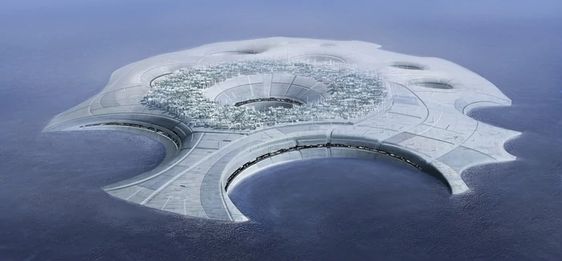
In Star Wars: Knights of The Old Republic, Bioware’s seminal masterpiece, the player travels to four different worlds in search of the enigmatic Star Maps. Tatooine, Kashyyk, Korriban, and Manaan are the worlds you visit. In terms of a planet’s political landscape, Manaan may be the most interesting of the four.
Manaan is a world submersed in oceans located within the galaxy’s inner rim. It is populated by the native Selkath, a race of amphibious humanoids. Most would not give this water world a second thought if not for its chief and only export: Kolto. Kolto is a special healing liquid that is highly valued by all major factions in the galaxy. During the Jedi Civil War, both the Republic and the Sith Empire sought to secure this exclusive resource to gain a tactical advantage over the other. Unlike the other worlds the player visits during the game, Manaan is the only one to declare a policy of strict neutrality during the war. The planet remains open to both the Republic and the Sith Empire to participate in the trading of kolto. In a display of unprecedented occurrences, the two warring factions are forced to tolerate each other’s presence. The Selkath are only able to maintain this peace by threatening to destroy the entire supply of kolto should one side try to seize it for themselves.
The government of Ahto City is essentially operated like a free private city. A free private city is described by Titus Gebel as follows,
“Imagine a private company offers you the basic services of a state, such as the protection of life, liberty, and property within a territory. You pay an expenditure-based amount for those services. Apart from that, you are free to do as you choose. Your rights and obligations are laid down in a contract with the provider. Conflict about its interpretation go to independent arbitration. Thus, as a contracting party, you’re on equal footing with the governance service provider.”
Much like special economic zones (SEZs), these cities operate outside the jurisdiction of the local government and manage their own legal and economic affairs. Much like the small but incredibly wealthy city-states, Hong Kong and Singapore. These states share the common characteristics of sound property rights, a straightforward legal system, openness to domestic and international markets, a stable financial system and sound money, and non-burdensome tax and regulatory regimes. Ahto City seems to possess many of these qualities. Residents and visitors alike are free to trade with one another, primarily in the distribution of kolto, but many other vendors reside in the city as well. Property rights seem to be respected. The legal system is easy to understand and is committed to a principle of non-aggression as demonstrated by their zero-tolerance policy towards committing violence in the streets. In the galactic scheme of things, Ahto City serves as a neutral port in which all denizens of the galaxy must engage in peaceful, voluntary trade, much like Hong Kong in the real world.
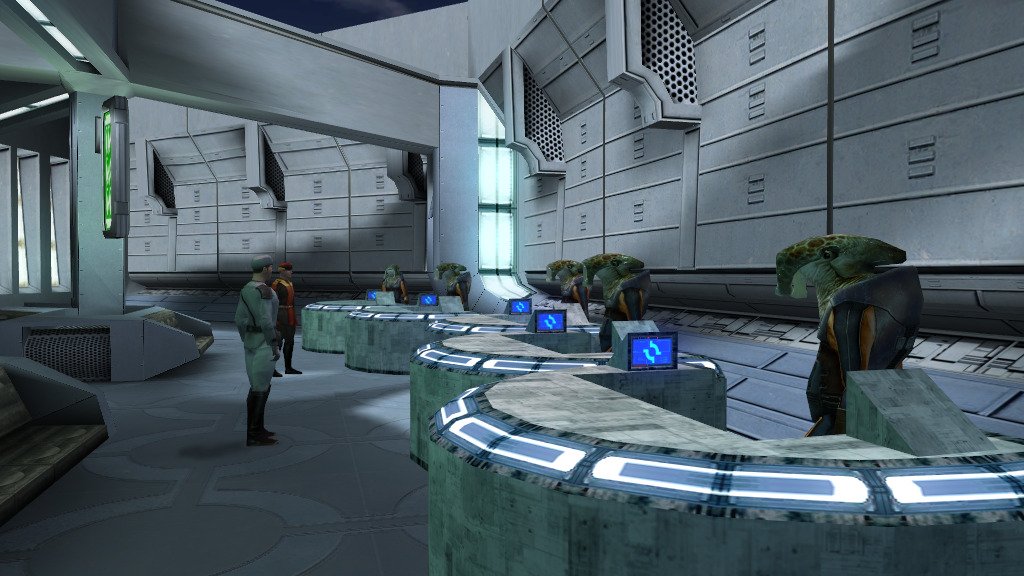
I am unaware of the personal political and philosophical views of the developers of Bioware at the time that they made this game, but it is always fascinating when a video game subtly presents a particular political system within its world, especially when that system so closely resembles a classical liberal social order.
 Raithwall