
Halo is probably my favorite video game franchise of all time. I remember going over to a family friend’s house on Christmas Eve as a small child, around 2003, watching my older brother and a friend play this game called Halo. I was mesmerized by this amazing science-fiction world, and the fast-paced violence. I remember later asking my parents to buy this game for me. I woke up one Christmas morning in 2004 to find under the Christmas tree a brand new original Xbox. With it came several games I had asked for and more – Star Wars: Battlefront, Star Wars: Knights of The Old Republic, Lord of The Rings: The Third Age, The Incredibles, and Halo 2. I booted up Halo 2 for the first time a few days later and my lifelong obsession with the Halo universe was set in stone.
I view the original series of games created by Bungie as a masterpiece. When I heard that a new studio called 343 Industries had been formed to create the next entry in the Halo series, I was over the moon with excitement. Then Halo 4 came out, and it was…decent, but I was left wanting more. I caught myself up on all available Halo lore. I finished the Forerunner Trilogy, read all the other novels and comics, and devoured all of the promotional material in anticipation of the next installment – Halo 5: Guardians. But not only did Halo 5 fail to live up to expectations, it severely damaged Halo’s status as a franchise. After receiving so much negative feedback from the fans for this entry, 343 realized that a return to form was needed. In 2018, Halo: Infinite was announced. Fans once again held out hope that Halo would return to its former glory, but we once again left feeling underwhelmed. Recently, many of 343’s former executives parted ways with the company and the studio was renamed Halo Studios. A whole new team has been assembled to design the next entry in the Halo series.
In this series of essays, I will explain where I think Halo went wrong over the last decade and what needs to happen for the franchise to return to its former glory and win back long-time fans.
Halo 4:
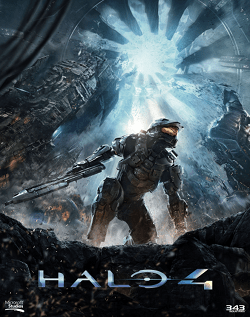
When Bungie announced that it would no longer be producing Halo games following Halo: Reach, many fans believed that the story of Master Chief had ended with Halo 3. But then at E3 2011, a teaser trailer for Halo 4 was revealed. The entire gaming community was elated. The Master Chief was finally returning. As the trailer alluded to, the story would pick up following Halo 3’s legendary ending with Cortana and Chief onboard the severed half of the Forward Unto Dawn drifting towards a mysterious planet. Along with the game, 343 announced two new series of novels – the Forerunner trilogy written by legendary science fiction author Greg Bear, and the Kilo-Five trilogy written by Karen Traviss, bestselling author of novels from the Star Wars and Gears of War franchises. The Forerunner Trilogy would focus on the demise of the Forerunners at the hands of the Flood, expanding on the Didact and the Librarian, two characters introduced in Halo 3’s Terminals.
A live-action miniseries called Halo: Forward Unto Dawn was also in development.
At San Diego Comic Con 2011, 343 held a panel to promote the newly announced media. Sitting on the panel was Franchise Development Director Frank O’Connor, Managing Editor Kevin Grace, Executive Producer Dan Ayoub, Producer Dennis Ries, Franchise Writer Allison Stroll, Greg Bear, Karen Traviss, and (for some reason) Burnie Burns of Rooster Teeth. Aside from Halo 4, the panel was also there to promote the recently announced remaster of the first Halo game, Halo: Combat Evolved Anniversary. During the panel, Frank O’Connor stated that when writing new material for the expanded universe that would tie in with the games that players would not have to “read a book to understand a game or vice versa” and that “all these things [media] will work in a standalone way.” But as I will demonstrate as I go through Halo 4’s campaign, this turned out not to be the case. As such, it was quite detrimental to Halo 4 and the series moving forward.
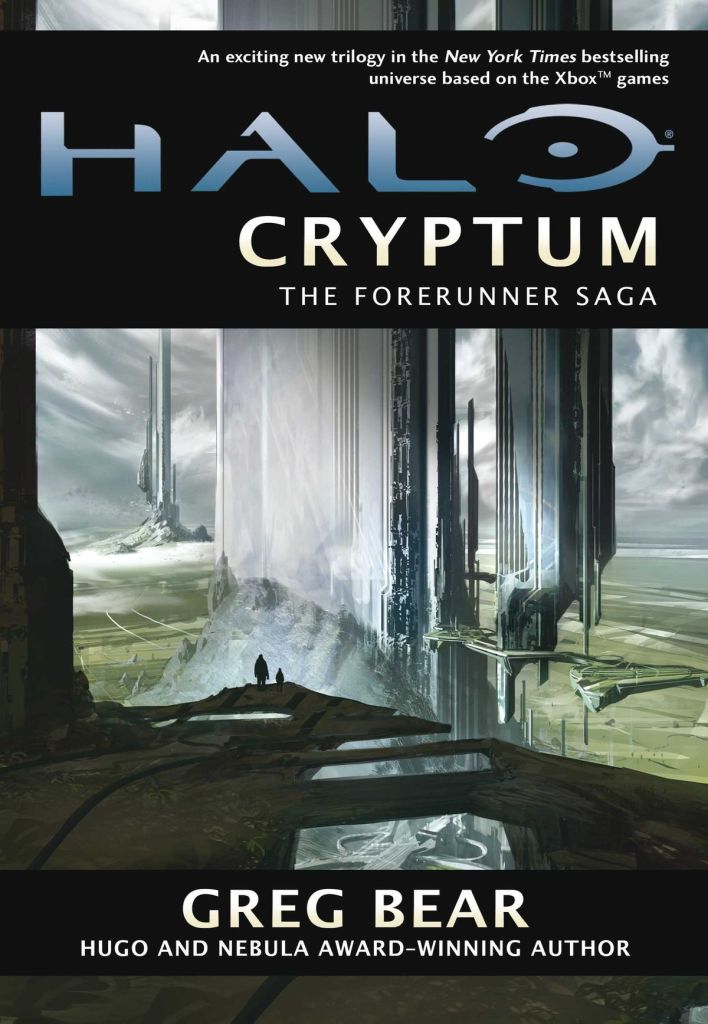
The first book in the Kilo-Five trilogy by Karen Traviss was titled Glasslands, released on October 25th, 2011. The first book in Greg Bear’s Forerunner trilogy was called Cryptum. Of the two novels, Cryptum was the only one I read before playing Halo 4. Cryptum is the story of a young Forerunner named Bornstellar Makes Eternal Lasting, told from his point of view. Bornstellar is a rather rebellious youth and finds himself on the planet Erde-Tyrene, the ancient name for Earth. He is on this planet searching for ancient Precursor artifacts. The Precursors were the ancient civilization that preceded even the Forerunners. They were first introduced by name in the Halo 3 Bestiarium. Joining him on his quest are two humans; Chakas, a clever young man, and Riser, a two-hundred year old Florian, an extinct breed of human reaching a little over 3 ft. tall. The three treasure hunters stumble upon a massive object in a crater which turns out to be the Didact’s Cryptum. After freeing the Didact, they learn that he was imprisoned there for opposing the use of the Halo Array on the Flood, which the Forerunners first encountered 10,000 years prior. On their journey with the Didact through space, they learn that humanity had once been an interstellar civilization rivaling that of the Forerunners. They too had encountered the Flood and allegedly waged war against the Forerunners. After their defeat, the Forerunners reduced their civilization and their genetics back to their hunter-gatherer roots. They are later captured by the Master Builder, the Forerunner who designed the Halo rings. Before their capture, the Didact gives Bornstellar his genetic imprint, implanting his memories and a part of his consciousness into the young Forerunner. After their encounter with the Master Builder, the group is separated. The Forerunner Ecumene Council calls the Master Builder to stand trial for the unauthorized use of a Halo Ring on the San’Shyuum homeworld of Janjur Qom. Bornstellar is summoned to testify as a witness. In the middle of the trial, the Forerunner capital is attacked by a Halo ring under the control of the rogue AI Mendicant Bias. The novel ends with Bornstellar meeting with the Librarian on the Ark.
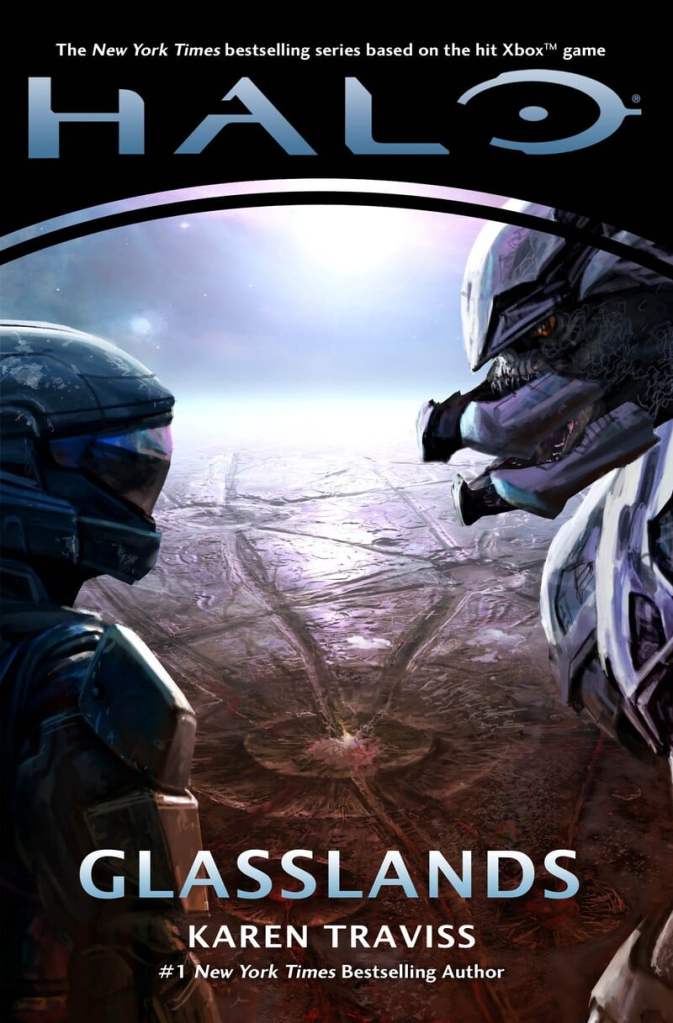
The first entry in the Kilo-Five series, Glasslands, takes place immediately after the Human-Covenant War. It is told from three different perspectives: Dr. Halsey, Senior Chief Mendez, and the remaining Spartans still trapped on Onyx; ONI agent Serin Osman and the Kilo-Five Team; and Jul M’Dama on Sanghelios. Halsey, Mendez, the remaining members of Blue Team, and the Spartan-IIIs hadn’t been seen since Ghosts of Onyx, published in 2007. The survivors of Onyx are rescued by the UNSC and are brought up to speed on recent events in the galaxy. Meanwhile, we meet Serin Osman, a washout from the Spartan-II program. The planet of Sanghelios is embroiled in a civil war between one faction led by the Arbiter and another that does not trust humanity. Osman is tasked by ONI with leading a team made up of ODSTs and a surviving Spartan-II to destabilize Sanghelios by pitting both factions against each other so that they are too busy to threaten humanity. We also learn the origins of Jul M’Dama and his faction. The rest of the trilogy deals with the origins of the UNSC Infinity and the continuation of the Sanghelli Civil War.
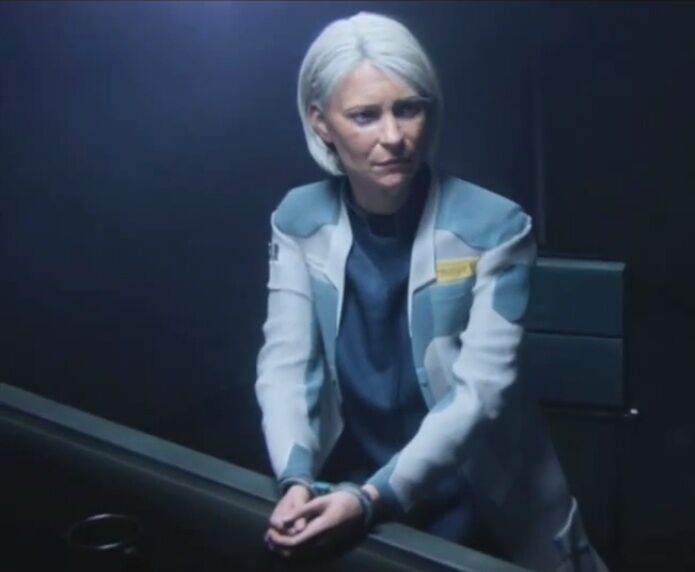
Then, Halo 4 finally came out on November 6th, 2012. Halo 4 begins with a prologue of Dr. Catherine Halsey being interviewed by some mysterious ONI agents about the Spartan program. It’s good to see Dr. Halsey, who first appeared in an actual game in Halo: Reach, getting more exposure. It showed that 343 was making an effort to bridge the story told in the books with that of the games – making the universe seem more connected. She tells them to not underestimate John.
Then the game cuts to the Master Chief and Cortana on board the frigate. Cortana wakes up Chief and tells him that they were drifting in space for four years. She tells him that they need to move fast and prepare for boarders as a Covenant fleet has intercepted them, to which Chief replies, “I thought we had a truce with the Covenant.” Cortana says, “A lot can change in four years.” This is very strange dialogue to hear. First of all, the UNSC didn’t have a truce with the Covenant, they had a truce with the Elites who had broken away from the Covenant. The Covenant, as we knew it in the first three games, was defeated. But this is never again addressed in the game, not even when Chief and Cortana reunite with the UNSC later on.
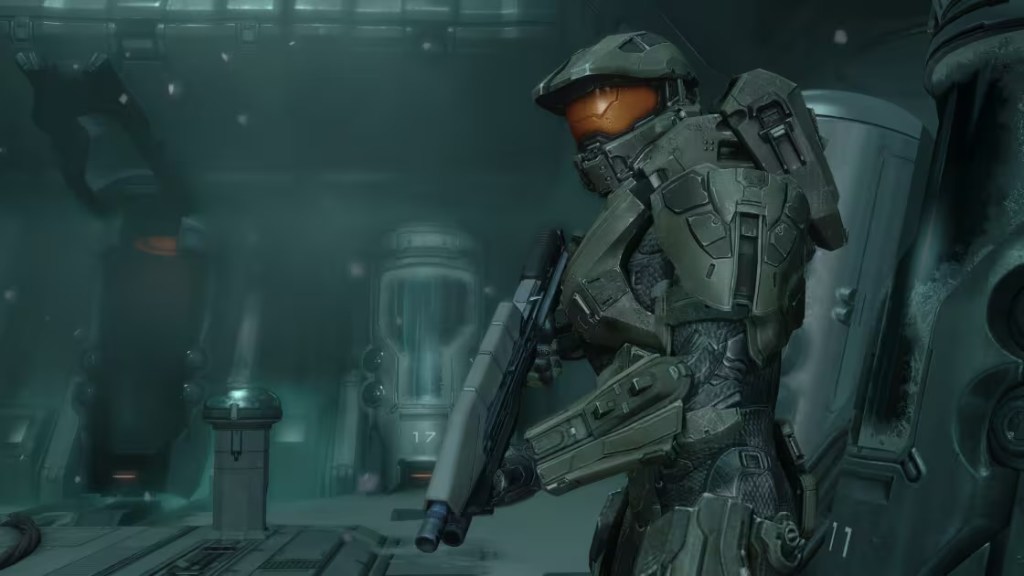
It turns out that this is a Covenant splinter group led by an elite named Jul M’dama. As stated above, Jul M’dama was introduced in the novel Halo: Glasslands. Jul was a Sangheili warrior who, after the war with humanity, disapproved of the Arbiter’s alliance with the humans and joined a group of Elites who still believed in the Great Journey called the Servants of The Abiding Truth. Though he didn’t believe in it himself, he exploited the fanaticism of the group to wrestle power away from the Arbiter to keep Sanghelios safe from the humans. But in order to have known any of this information you would have had to have read Glasslands, which is the exact kind of thing Frank O’Connor said you wouldn’t have to do in order to understand the story.
Let’s contrast this with Bungie. Before the release of Halo 2, Bungie published a novel written by Eric Nylund called Halo: First Strike, which told the story of how Chief, Cortana, Johnson, and Blue Team made it back to Earth. It also introduced the Prophet of Truth, Tartarus, and the Brutes. While it is a fine novel that enhances one’s understanding of the overall story, it is not at all required to understand Halo 2’s story. The opening cutscene alone shows us the political structure of the Covenant and how they reacted to the destruction of Alpha Halo. When we cut to Chief and Johnson aboard the Cairo Station, the Master Gunnery Sergeant in the armory asks Johnson how he made it back home in one piece, to which Johnson replied, “Sorry, Guns. It’s classified.” That’s it. That’s all you need to hear. Johnson doesn’t explain how he made it back, but the game acknowledges that Johnson survived after many had presumed at the end of the first game that the only survivors were Chief and Cortana. If the player wants to know how it happened, they can read the novel. In this case, no one is required to do homework to understand crucial elements of the story. The same cannot be said about the Reclaimer Saga.
Back to Halo 4, Chief and Cortana crash land onto this Forerunner shield world known as Requeim on board the Dawn. After noticing Cortana’s erratic and unusual behavior, she explains to the Chief that she is in the early stages of rampancy. Chief assures her that if they can just get back to Halsey, then she can be saved. This becomes a recurring theme throughout the game. They then begin their journey through the planet. They eventually make their way to a Forerunner structure where they encounter a brand new enemy, the Prometheans. The Prometheans are Forerunner androids. Soon after this, they meet the Didact – the first living Forerunner seen in the last 100,000 years. His backstory was fully fleshed out in the Forerunner Trilogy. Having read Cryptum, the first entry in the series, I knew who the Didact was and was very excited to see him appear in the game. It turns out that when Chief and Cortana discover him, he had been imprisoned for 100,000 years in a spherical apparatus called a Cryptum. This had seemingly driven him insane. The Didact then pulls the Master Chief up into the air using some sort of gravitational technology and performs a speech about his past betrayal and how humanity is not meant to inherit the Mantle. He tells Chief and Cortana that the “Forerunners have returned” and proceeds to send him crashing into a pillar. He then flies away in his Cryptum, supported by his Promethean warriors and Jul ‘Mdama’s Covenant who worship him as a god.

This scene and what follows with the Didact is one of the biggest problems I have with this game’s story. The Halo 3 terminals, the Forerunner Trilogy, and the game’s promotional material had all been building up to the return of the Forerunners. This is the ancient species that built the Halo rings to destroy the Flood and left their technology for humanity to one day reclaim. But when the Didact appears, Chief and Cortana do not seem at all phased by the fact that they were the first people to see a living Forerunner in 100,000 years! They don’t even mention it. They just go on acting like he’s just another enemy they have to defeat. They also automatically know that his title is the Didact without him even saying that himself. Moreover, the story never makes it clear what exactly the Didact’s goals and motivations are. I will come back to this subject soon.
Chief and Cortana escape and make contact with the UNSC Infinity, a massive warship, bigger than any human vessel we have seen in a game. They make their way through the jungle, battling the Prometheans along the way. They then encounter Commander Thomas Lasky and a team of Spartan-IVs led by Commander Sarah Palmer. Lasky had been introduced as a young cadet who was rescued by the Chief in the Forward Unto Dawn miniseries, so it was cool to see him appear in the game. This is another example of 343 doing a good job of connecting the expanded lore to the main games. Then we listen to Palmer deliver one of the most infamously cringe lines in the entire series. “Thought you’d be taller,” she says to Chief. Thought you’d be taller? This is your first time meeting the literal savior of humanity, who was presumed dead for four years, and your first remark is that? Needless to say, this scene was universally despised by fans. She is also not wearing a helmet in the middle of a combat zone, which is odd for a Spartan. Chief helps the Infinity repel the Didact and the Covenant.
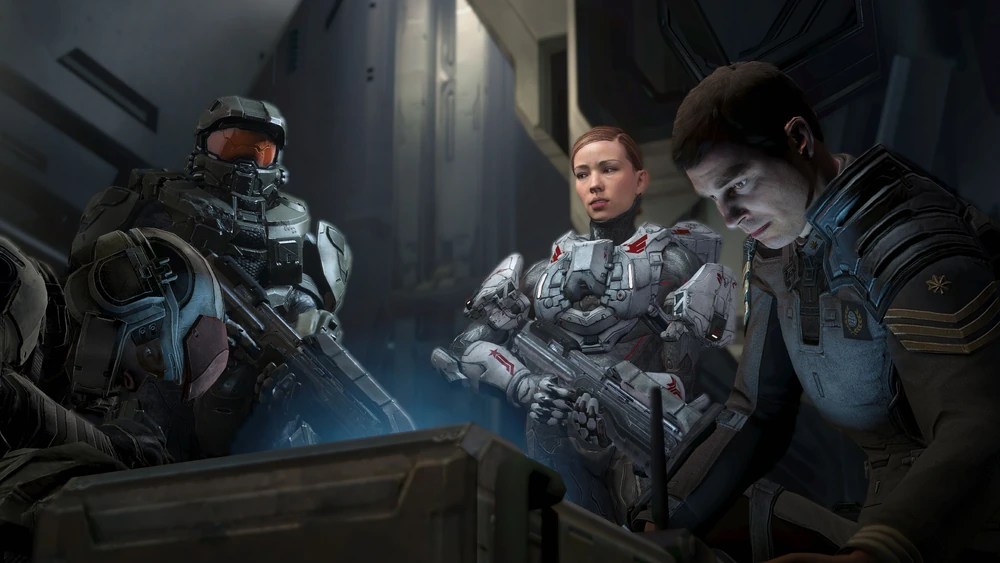
After this skirmish, the group returns to the bridge of the Infinity where they meet with the ship’s captain, Andrew Del Rio. Del Rio and Lasky explain that Infinity’s mission has been to locate the remaining Halo rings and deactivate them, setting up research facilities as well. Del Rio then orders Lasky and Palmer to prepare operations to free the ship from Requiem’s gravity well and report this first contact incident back to FLEETCOM. Chief and Cortana protest against this, with Chief pointing out the Didact’s vulnerability. But Del Rio rebukes them. This is the beginning of what can be characterized as Del Rio’s unhinged and nonsensical behavior. Another problem in this sequence of events is the fact that Chief, Cortana, and Infinity’s crew refer to the Didact in such a nonchalant way, as if he is just another Covenant military commander. Again, this is the first living Forerunner seen by humanity in 100,000 years and it doesn’t even seem to faze them. It’s pretty much, “Well, I guess that’s just the Didact and that’s that. Open fire.” There is no attempt made to communicate or negotiate with this member of a fabled species. Of course, this most likely would have been pointless and ineffective since we previously witnessed how hostile he is towards humanity, but you would expect such an effort to be made at least.
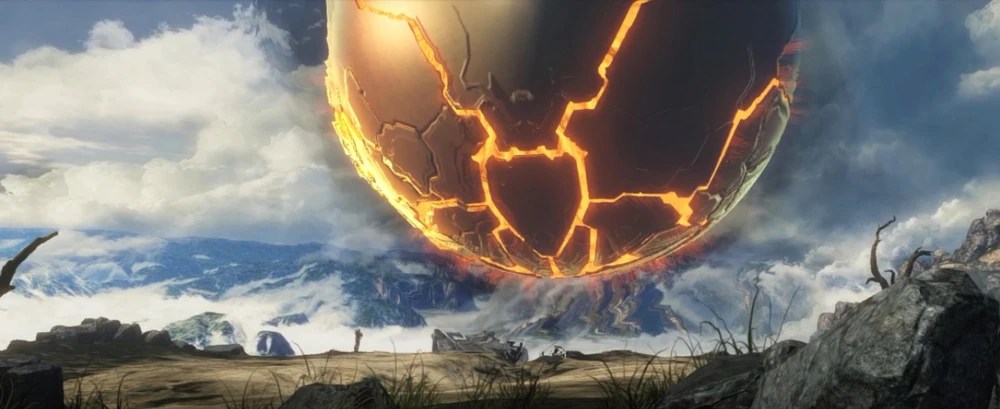
Chief, Lasky, Palmer, and a contingent of Spartans and Marines head out to disable the gravity well. While interfacing with a console inside one of Requiem’s structures, Cortana disappears, seemingly sucked into the console. While searching for Cortana, the Chief enters a portal transporting him to a chamber where he encounters an almost angelic essence of what remains of the Forerunner known as the Librarian. She begins to explain that her memories were retained to assist humanity on their quest to attain the Mantle. She warns Chief that the Didact intends to leave Requeim to acquire a powerful ship that once belonged to him – the Composer. The Didact intends to use this weapon against humanity. In a series of flashbacks, we are shown that humanity was once an advanced, spacefaring race, creating an interstellar empire. Humanity expanded into Forerunner space and had to be driven back by the Didact and his forces. What the Forerunners did not know, however, was that humanity was not expanding, but fleeing from the Flood. Recognizing that defeat was inevitable, the Forerunners constructed the Halo Array. Refusing to sacrifice the entire galaxy, the Didact constructed the Composer, which would extract the mind of a living specimen and digitize it, preserving it for eternity. The Didact used this on his Promethean Warrior-Servants, transforming them into the machines we see in the present day. But the Didact also used this on the humans as punishment for their crimes.

This scene attempts to explain the motivations of the Didact, but a lot of context is missing. A somewhat complete summary of the Didact’s (and Librarian’s) backstory can be found in Halo 4’s Terminals. The Terminals show the player the history between the Didact and the Librarian – that they were once husband and wife. It shows us a glimpse of the Forerunner-Human War, the Librarian’s push to utilize the Halo rings, and the Didact’s evolution from the noble commander of the Forerunner’s military forces to a crazed tyrant hellbent on destroying humanity to save the galaxy. They also give us the first visual appearance of other characters from the Forerunner Trilogy, including Faber the Master Builder, and Forthenco, the Lord of Admirals. While these Terminals were beautifully done and add much to the lore, why was information that was so crucial to understanding the Didact’s character and why he’s fighting us hidden away deep in the levels of the game, only for the more intrepid players to find? The casual player who only wants to play the campaign and not look for bonus content isn’t going to find these Terminals. Many of them finished the campaign not understanding who they were fighting against and for what reason. The Librarian then explains that she helped guide human evolution throughout the millennia to eventually result in the creation of the Master Chief, so that Humanity could one day reclaim the Mantle. We will come back to this thread later on. Suddenly, the Didact’s voice is heard within the chamber, revealing that he has found them. A swarm of Prometheans appears. The Librarian tells Chief that she must accelerate his evolution to make him immune to the Composer. Chief allows her to do so. Chief and Cortana reunite and destroy the gravity well.
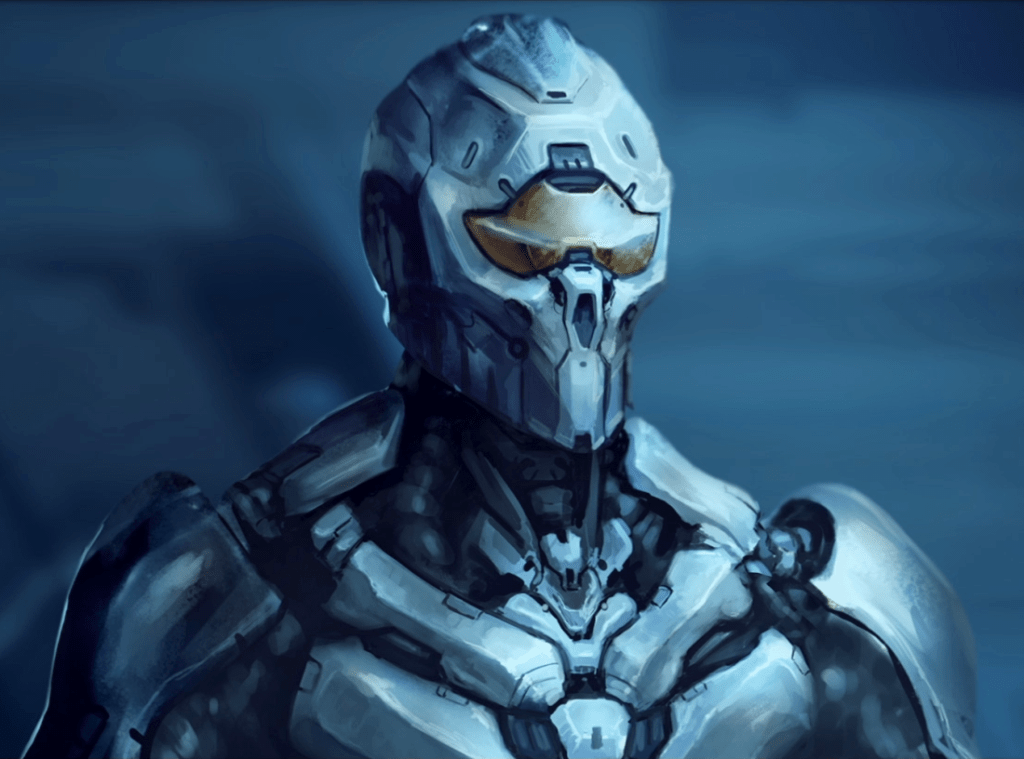
When they return to the ship, Chief and Cortana tell Del Rio of the Didact’s plan, but the captain doesn’t believe them. He orders the ship to be set on a course to Caraneye Station. After a massive outburst from Cortana, Del Rio orders Lasky to remove her data chip and delete her. But Lasky hesitates, allowing Chief to retrieve her from the console. Chief tells Del Rio that if he won’t stop the Didact, then he will do it himself. Del Rio orders Chief to be arrested, but the crew disobeys him. Chief then walks out. This is another example of why so many fans hate the character of Del Rio. Why the writers decided to make him this abrasive, stubborn, irrational person who yells a lot is unknown. Cortana later goes on a monologue about how Requeim’s artificial sun isn’t real, but since she doesn’t feel real, she can’t tell. She then tells Chief to figure out which one of them is the machine. Lasky comes down and gives them a pelican to use against the Didact. He wishes them luck.
They fly the Pelican to the Forerunner structures where the Didact is preparing to leave. While inside one of the structures, the Didact’s voice is heard. Chief tells Cortana to track where it’s coming from, but she doesn’t know what he’s talking about. Only he can hear him. Unable to stop him from leaving, Chief jumps on the back of a Covenant dropship and follows the Didact to his destination – Installation 03, Gamma Halo. The Didact attacks a nearby space station which holds his prize – the Composer. Chief and Cortana take control of the Lich and make contact with Dr. Tillson, the head scientist aboard Ivanoff Station. While on approach, Cortana has another rampancy malfunction and crashes the ship into the asteroid. They both survive and fight their way to Tillson. Chief tells her to move the Composer before the Didact can get it, but she informs him that it is nearly impossible to move it. Reluctantly, Dr. Tillson allows him to nuke the Composer. But they are unable to reach the Composer with the nuke in time. The Didact takes control of the Composer. In an instant, the Didact activates the device and composes the entire crew of the station. Watching these people get vaporized is one of the most gruesome and graphic scenes in the entire franchise.

Chief and Cortana board a broadsword fighter carrying the nuke and go after the Didact before he can destroy Earth. You then get to participate in a pretty awesome on-rails flight mission piloting the broadsword through the ship a la the Death Star trench run. Chief makes contact with Infinity. Expecting Del Rio, it is actually Lasky who answers Chief. FLEETCOM did not approve of Del Rio’s abandonment of Chief on Requeim, so he was replaced by Lasky. Unable to penetrate the ship’s interior on their own, Infinity blasts a hole into it, allowing Chief to enter. Crashing into the ship, Chief carries the nuke on his back to the core of the ship. Once there, Cortana splits all of her rampant personality spikes to disable the Composer’s shielding, but they are too late to stop the Didact from unleashing the Composer on Earth. He then destroys the console Cortana had been plugged into. Seeing his friend die, Chief presses on to finish the Didact. On top of the light bridge connecting to the Composer’s core, the Chief faces down against the Didact, but he is no match for his powers. Picking him up with his powers of levitation, before he can drop the Chief to his death, Cortana emerges from the light bridge and ties down the Didact. The Chief uses this opportunity to stick a grenade to his chest, pushing the Didact off the bridge and into the Composer. Chief finally sets off the nuke.

In an out of body experience, Chief wakes up in a digital realm facing a life-sized Cortana. She tells him that she can’t come with him this time. Chief refuses, telling her it was his job to take care of her. She reminds him that they were supposed to take care of each other. They say their final goodbyes and Chief is picked up by a pelican while drifting in space. Chief is then seen gazing out the window of the Infinity, when Captain Lasky joins him. While Lasky tries to comfort Chief after his loss, Chief says that their job as soldiers is to protect Humanity no matter the cost. But Lasky points out that humanity and soldiers are not two separate things. At the end of the day, soldiers are human. As Lasky leaves him be, Chief thinks to himself, “She said that to me once, about being a machine.” The final scene shows Master Chief and the Spartan IVs aboard the Infinity unequipping their armor while a monologue of the Didact plays in the background.
In this final scene, 343 was attempting to humanize Chief and begin a subplot that helps further develop this part of Chief’s character, something that will be explored in later games. In retrospect, it is a bit odd that Lasky in the final scene says that Chief’s loss of Cortana is more significant than anything he’s been through, considering the fact that in the Forward Unto Dawn prequel series, Lasky loses almost his entire squad that he went through basic training with at Corbulo Military Academy, especially the loss of his love interest. Moreover, from the novel The Fall of Reach to Halo 4, only a few months elapse in the period of time that Chief and Cortana know each other. Of course, close friendships in a military setting don’t always take as long to form. At the same time, Bungie usually kept the nature of Chief and Cortana’s relationship vague. It was usually platonic, but sometimes hinted at romance. Nevertheless, I think Halo 4’s ending succeeded at striking an emotional chord with the player. I liked that Lasky was portrayed as a character very supportive and loyal to the Chief after Chief had saved his life as a cadet twenty years prior. In spite of the fact that I found the Didact and the other Forerunners’ storyline a tad underdeveloped, I thought the campaign set the story of the trilogy up in a way that would further unveil the Forerunner’s past. Also, I have to say that Keith Szarabajka’s performance as the Didact was phenomenal. I would go on to have high hopes for the next installment.
Now on to the rest of the game.
I have to say that the first time I played the second level and stepped on to the cliff and saw those massive Forerunner structures floating in the sky I was amazed. The game’s graphics for its time were simply breathtaking and this moment in particular captured the grandness of this ancient alien civilization. Unfortunately, this is where my praise of the game’s visuals comes to an end.
Why the developers thought it was necessary to completely transform Bungie’s original art style is still unknown to me. Perhaps they thought that since it was their first entry in the series that they felt they needed to add their own signature style to it, but everything about this new art style feels off. The Elites, who originally were portrayed as strong but agile warriors, now looked bulky and slow. Forerunner architecture went from resembling that of a sleek, ancient design to very cyberpunk in appearance. Chief’s new armor looked big and cumbersome. And the Marines, honestly, just looked goofy. The art design wasn’t the only thing that was off. While Neil Davidge’s score is beautiful, it just doesn’t sound anything like Marty O’Donnell. Meaning, it doesn’t sound like classic Halo. At times, it sounded more like something John Williams would’ve composed for a Star Wars film.
As far as the gameplay is concerned, it is really unremarkable. Pretty much every level in this game has you walking down a hallway blasting enemies so you can reach your objective of initiating a quicktime event of Chief pressing a button. The level design is incredibly linear and uninteresting. What made the previous games so great was the variety in level design. While there were plenty of levels that had you running down several corridors after another, there were also levels with big open areas with a vehicle sandbox for you to play around with. Sometimes you would see both designs together in one level. It was also a lot of fun to fight alongside a squad of marines or Elites, something mostly absent from Halo 4. A lot of people thought fighting the Prometheans was annoying. I personally didn’t care about them either way. What bothered me was how weapons in this game ran out of ammo way too quickly. All of this put together leaves you with a campaign that is forgettable and without any replay value. Also, as much as I love Jen Taylor as Cortana, I found her overly melodramatic portrayal of the character in this game to be quite annoying.
Multiplayer, on the other hand, was a different story. For the most part, Matchmaking was a lot of fun. Taking a page from Call of Duty, this time you spawn with customizable weapon loadouts, plus the new armor abilities. I had a lot of fun playing Slayer and Capture the Flag. In Halo 4’s multiplayer, you play as Spartan-IVs, which makes sense since in Reach’s multiplayer you played as Spartan-IIIs. This time, the multiplayer takes place within the game’s canon, in which matchmaking is depicted as Spartan-IV units participating in wargame simulations. Additionally, there was a new game mode called Spartan Ops. Spartan Ops is an episodic, story- driven campaign that takes place shortly after the events of Halo 4. The story follows the UNSC Infinity as it battles Jul ‘Mdama’s Covenant for control of Requiem. Spartan Fireteam Majestic takes center stage in the cutscenes, while the player takes on the role of a member of Spartan Fireteam Crimson. Spartan Ops was only playable through online co-op and episodes were released weekly. The story of Spartan Ops was actually very well done.
To sum it up, Teams Majestic and Crimson are sent into Requeim to reclaim it from Jul M’Dama’s Covenant and secure vital Forerunner artifacts. After one of the artifacts brought aboard sends the chief science officer, Dr. Glassman, into a portal, Infinity brings Dr. Halsey aboard to help investigate. Halsey discovers that the artifact is communicating with the ship’s engines, built from Forerunner technology. Meanwhile, Glassman has been taken prisoner by Jul ‘Mdama. The Covenant have tasked Glassman with accessing the Librarian’s memories within one of Requeim’s systems. Lasky and Palmer later discover that Halsey has secretly been in contact with ‘Mdama. Spartan Gabriel Thorne of Majestic is accidentally transported to Requeim after interacting with the artifact and is able to rescue Glassman. Back on board the ship, Halsey uses a secret override code to hack the ship AI Roland’s system to free her from her cell. Accessing Infinity’s files, she learns for the first time that the Master Chief is alive. She contacts Jul ‘Mdama and tells him that she wants to work together to find the Librarian. Roland regains control and has her arrested, but Prometheans attack the ship and take her with them. Admiral Serin Osman, who has now been promoted to head of ONI, orders Lasky to eliminate Halsey. While Palmer takes it upon herself to carry out the order, Lasky sends Majestic to rescue her. Halsey is able to activate the device on Requeim and makes contact with the Librarian. The Librarian gives her the Janus Key, which reveals the location of every piece of Forerunner technology in the galaxy, which she intended for humanity to have. When she exits the terminal, Jul takes one half of the key from her. At this moment, Thorne comes in to rescue her. She throws him the other half of the key. Palmer shows up and shoots her in the shoulder, but is unable to finish her off before the arrival of more Elites and Prometheans. Jul ‘Mdama and Halsey escape. The Spartans disable the slipspace anchor holding Infinity in place before Requeim is pulled into the sun, destroying it. On board ‘Mdama’s ship, Halsey, with the loss of an arm, offers to help him in exchange for revenge.
Then there was Halo: Escalation, a line of comics published by Dark Horse, from 2013-2015. Escalation picks up after the events of Halo 4 and Spartan Ops, and deals with the rest of the Janus Key conflict. Compared to other Halo comics, Escalation was mediocre at best. The worst part about it is the arc “The Next 72 Hours.” In this arc, the Master Chief is reunited with his friends from Blue Team and they are deployed to Gamma Halo to investigate the disappearance of a scientific expedition. It turns out that the science team, and Spartan Black Team, were killed by the Didact, who survived his apparent death at the end of Halo 4. The Spartans of Blue Team defeat the Didact with the help of a monitor and have him composed. Yes, despite the game explicitly telling us that the Didact cannot be composed, he is composed in this comic. 343 made the terrible decision of bringing back the main villain of their first game and killing him off in a comic that ten people read. The first of many bad decisions in the years to come.
So those are my thoughts on Halo 4. Read on to Part 2 for my analysis of Halo 5: Guardians.
Let me know your thoughts in the comments!
 Raithwall