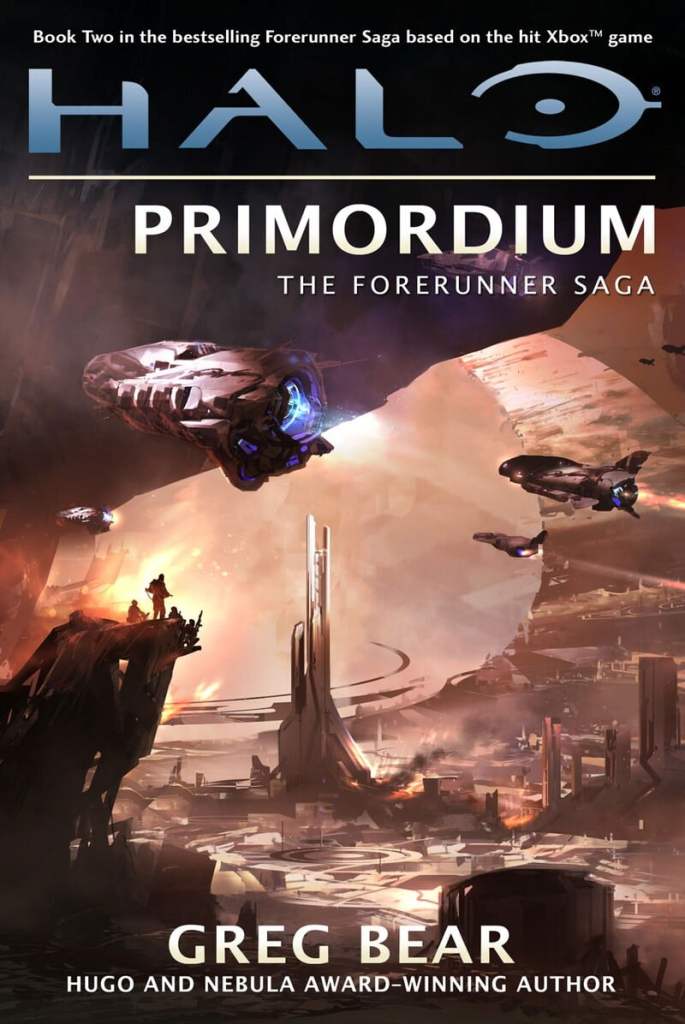
In anticipation for the next game in the series, I took it upon myself to catch up on all of the expanded lore released before Halo 4. Starting from the time before the games, I completed the remaining books in the Forerunner Trilogy, Primordium and Silentium. Primordium is one of my favorite novels in the series. It picks up the story of a young ancient human named Chakas, introduced in the previous installment. The story begins in the year 2554 with an ONI science team from the UNSC Rubicon interrogating a Forerunner AI who claims to have once been Chakas. Upon being stranded on Installation 07, Chakas, along with his new friends, goes on a journey to take back the ring from the control of the Primordial and his puppet Mendicant Bias. When his friend the IsoDidact arrives with the Forerunner fleet, he finds Chakas mortally wounded. Now who is the IsoDidact? If you remember from Cryptum when the Didact performed a genetic imprint on Bornstellar, he essentially made him a clone of himself. Bornstellar became another Didact in the process. Hence, there are two Didacts. The original Didact, or, the Ur-Didact, and the IsoDidact. In order to save him, IsoDidact extracts his consciousness and stores it in the head of a monitor. The IsoDidact and Monitor Chakas go to interrogate the recaptured Primordial. After being asked about the nature of his plan, the Primordial makes a horrifying revelation:
“Those who created you were defied and hunted. Most were extinguished. A few fled beyond your reach. Creation continued…it was long ago decided. Forerunners will never bear the Mantle…Through long study. The decision is final. Humans will replace you. Humans will be tested next…It is the way those who seek out the truth of the Mantle. Humans will rise again in arrogance and defiance. The Flood will return when they are ripe-and bring them unity” (Primordium, pg. 364).
When the Didact retorts that most humans are immune, the great beast reveals the shocking truth:
“No immunity. Judgement. Timing…Misery is sweetness. Forerunners have failed as you have failed before. Whether they will also fail has not been decided…We are the Flood. There is no difference. Until all space and time are rolled up and life is crushed in the folds…no end to war, grief, or pain. In a hundred and one thousand centuries…unity again, and wisdom. Until then-sweetness” (Ibid, pg. 364-5).
In a fit of rage upon hearing this dastardly revelation, the Didact activates the stasis capsule the Primordial had been placed in. Accelerating time rapidly, the Primordial experienced billions of years worth of decay in a matter of seconds, immediately eroding him into a pile of dust. It is revealed at the end of the novel that the individual telling this story to the crew of the UNSC Rubicon is none other than 343 Guilty Spark. Yes, Guilty Spark survived the ending of Halo 3. More on that in Part 3.
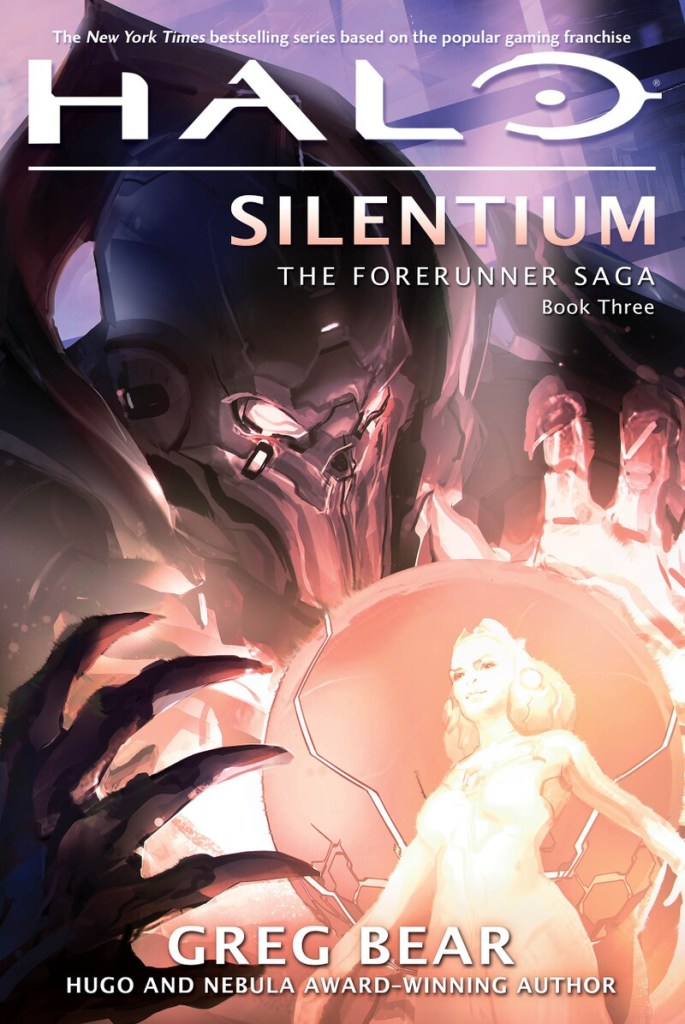
Silentium is an equally epic conclusion to the trilogy. It is the culmination of the Forerunner-Flood War and the Forerunner’s final solution. The Flood’s onslaught rapidly advances upon the galaxy, with millions succumbing to its will. The IsoDidact and the Librarian work desperately to evacuate the galaxy’s inhabitants to the Ark. The novel takes us to the past when the Librarian led an expedition to the ancient Forerunner homeworld of Ghibalb located in the Path Kethona system, searching for the origins of the Flood. The Librarian discovers that the Forerunners rebelled against the Precursors ten million years earlier and wiped them out. But some Precursors survived and returned to the galaxy in the form of the Flood. Back in the present, the Ur-Didact, sent to the Burn by the Master Builder, is captured by the Gravemind. The Gravemind confirms that the Precursors had deemed the Forerunners unfit to hold the Mantle and had chosen Humanity to inherit it instead. The Forerunners were enraged causing them to enact their genocidal campaign against their creators. The Gravemind also reveals that the Primordial’s consciousness lives on within it. This encounter drives the Ur-Didact mad and leads to his conflict with the IsoDidact and the Librarian, forcing the Librarian to imprison him in the Crytum. The Forerunners realize they have no choice but to fire the Halos. The Librarian draws the Flood to Earth to buy the IsoDidact time to fire the rings, where she ultimately perishes. Meanwhile, the A.I. Offensive Bias leads the defence against the Flood, commanded by the traitor Mendicant Bias. The IsoDidact fires the rings and destroys the Flood. In the book’s epilogue, Rebirth, the Forerunners and the Humans begin the reseeding process. We see the trial and imprisonment of Mendicant Bias on the Ark, left alive only because of his intimate knowledge of the Flood, should it ever be needed again.
At E3 2013, a teaser trailer for the next Halo installment on the Xbox One was unveiled. The trailer depicts the Master Chief wearing a brown cloak walking through the desert of an unknown world. Suddenly, the ground beings to rumble, revealing a giant Forerunner machine rising from beneath the sand. The trailer ends with a shot of Cortana’s old AI chip clutched in Chief’s hand. Some fans speculated that Chief had returned to the Ark to find a way to revive Cortana, and that the machine was some type of Forerunner sentinel (possibly a war sphinx) piloted by Mendicant Bias. The next year, a new trailer was dropped teasing the sequel to Halo 4, introducing a brand new character, Agent Jameson Locke. This trailer depicted Locke reviewing footage of the Chief jumping from the Cairo Station to give the Covenant fleet back their bomb. In the background, one can hear the Arbiter tell Agent Locke how he can find the Chief and that the lives of everyone in the galaxy are at stake. This revealed to millions of excited fans that the Arbiter, voiced by the legendary Keith David, was coming back to Halo. This was a fantastic bit of news for fans as the Arbiter was missed by many since he was noticeably absent in the last game.
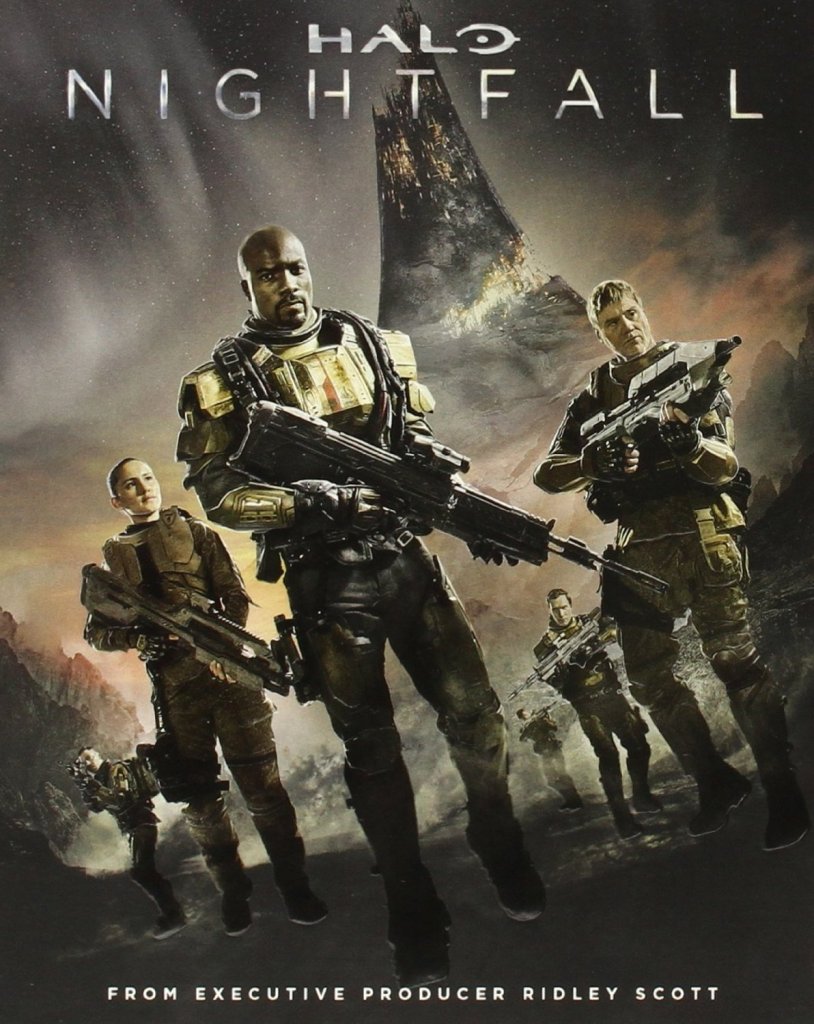
It was later announced that the character of Jameson Locke would be portrayed by Mike Colter, the future Luke Cage. Locke’s origin story was captured in a live-action miniseries called Halo: Nightfall. Locke leads a team to investigate mysterious happenings detected from a piece of Installation 04, still traveling through space. It was…mediocre at best. Not a great introduction for this new character.
Along with the announcement of Halo 5, 343 also announced a remaster of Halo 2 – Halo 2: Anniversary. This remaster would be included in a new compilation called The Master Chief Collection, which would include all four mainline Halo games, as well as their multiplayer modes. Blur Studios was behind the remastered graphics and amazing remastered cutscenes. Halo 2: Anniversary serves as a bridge between Halo 4 and Halo 5. The opening cutscene shows Spartan Locke on board a lich alongside the Arbiter and some Elites. When the Arbiter finds out that Locke is searching for the Chief, he tells him the story of how he first met John-117, thus beginning at Halo 2. The final cutscene shows Locke and the Arbiter exiting the dropship. Arbiter tells him that if Chief has left the fold, he has his reasons. Locke tells him that he intends to find out what those reasons are.
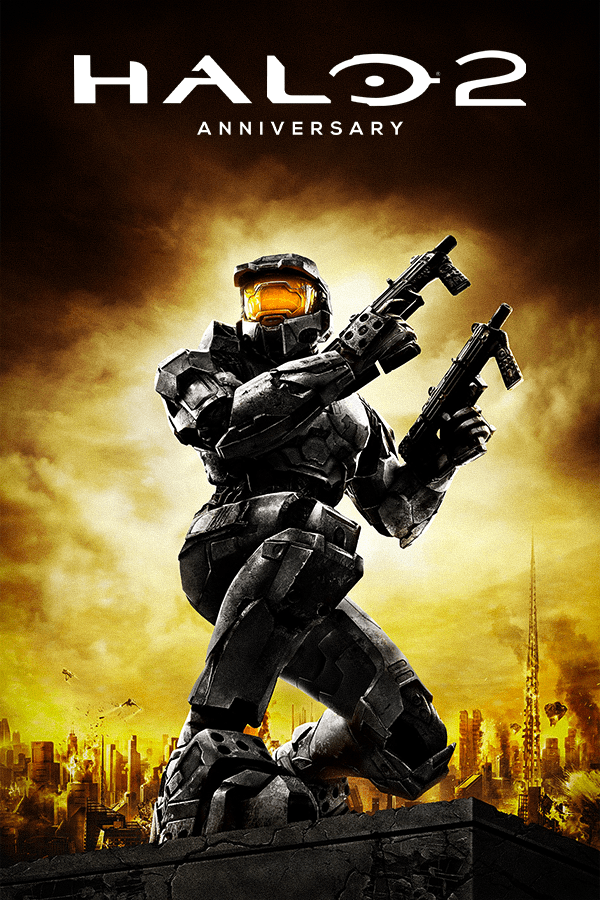
Like Halo: Combat Evolved Anniversary and Halo 4, Halo 2: Anniversary also had terminals hidden in each level. These terminals may have been 343’s best so far. The first three are from the perspective of ONI Agent Locke’s target profile of Thel Vadamee before he became the Arbiter. These three go into Vadamee’s military exploits against the UNSC and conclude with Locke’s recommendation to assassinate him in order to prevent humanity’s extinction. The next series of terminals follow from the final terminal of Combat Evolved Anniversary when Guilty Spark meets with the Heretic group on the Threshold Gas Mine. As the monitor reveals the true nature of the Halos to the Commander Sesa Refumee, we learn about the origins of the Covenant through a series of flashbacks, sometimes told from the perspective of a Covenant historian. We also learn the origins of the Arbiters and some of their legendary exploits such as the Taming of the Hunters and the Grunt Rebellion, briefly mentioned by the Prophet of Truth in the game. We learn that the position of Arbiter was once a rank held in high esteem until Arbiter Fal ‘Chavamee, the same Arbiter seen in “The Duel” from Halo: Legends, brought great shame upon it for questioning the Great Journey. Henceforth, the rank of Arbiter became known as a mark of great shame. Every Arbiter following this development was formerly an Elite with significant political influence who willingly went to their death upon becoming Arbiter. Upon unlocking every terminal across all four campaigns in the collection, two more terminals are unlocked. The first shows how the Prophet of Regret discovered the location of the Ark Portal when his forces discover a Forerunner Luminary on the former human colony of Meridian. Since the name of the planet according to the luminary was Erde Tyrene, it explains why Regret was so surprised to find humans on the very same world, known in the present time as Earth. The final terminal shows Spartans Fred and Linda reporting to ONI after Operation: First Strike and shows the Covenant fleet arriving at Earth at the beginning of Halo 2.
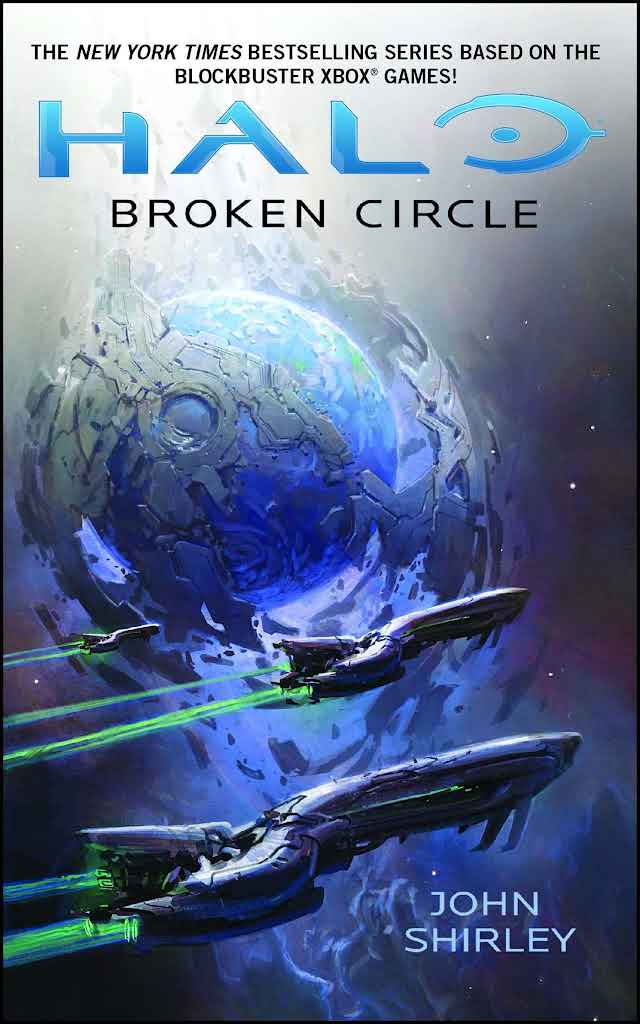
In keeping with Halo 2: Anniversary’s focus on the history of the Covenant and the origins of the Arbiters, a prequel novel about the early years of the Covenant, Halo: Broken Circle by John Shirley, was released. The first half of the novel covers a Covenant splinter faction led by the Sanghelli commander Ussa Xellus, who takes his people to a distant shield world. The second half of the novel follows a minor Prophet named Zo Resken who is caught up in the Great Schism three thousand years later. Having good relations with the Sanghelli leadership, he ultimately sides with them against the Brutes. The novel shows us how the Prophet of Truth and Tartarus planned the purge of the Elites and the massacre of the members of the High Council during the Battle of Delta Halo. Zo Resken and his Sanghelli allies escape High Charity and arrive at the Ussan System, where they ally themselves with the colonists and bring them back to Sanghelios at the end of the war. Resken remains on the Refuge in order to study it.
Other novels were released in the lead up to Halo 5, all taking place before Halo 4. Halo: Last Light by Troy Denning sees Blue Team and the Spartan-IIIs from Onxy on a mission to the colony of Gao to stop a Covenant splinter faction from acquiring Forerunner technology hidden underground. Halo: New Blood by Matt Forbeck heralds the return of the Alpha Nine team from Halo 3: ODST, specifically Gunnery Sergeant Edward Buck. Buck is recruited by the Spartan-III Jun who was last seen in Halo: Reach to participate in the new Spartan-IV program. Romeo and Mickey join him. Unfortunately, the novel kills off the Rookie, for some reason. Halo: Shadow of Intent by Joseph Staten brings back the legendary Elite shipmaster, Rtas ‘Vadum, also known as Half-Jaw. Vadum is sent on a mission by the Arbiter to hunt down a Prophet who is planning to use a prototype Halo installation. After defeating this Prophet, Vadum goes on to hunt down all remaining San’Shyuum, and is not heard from for a long time. Halo: Hunters in The Dark by Peter David does something interesting and reintroduces N’tho ‘Sraom and Usze ‘Taham, the two Sanghelli warriors who were playable in Halo 3’s four-player co-op mode. The UNSC and the Sanghelli discover a timer counting down on the Ark and send a joint task force to investigate. It is revealed that the Ark’s rampant monitor, 000 Tragic Solitude, had set this timer in motion to activate the rings and rid the galaxy of the species who damaged other Halos. The novel also introduces Olympia Vale. What I liked about this novel was getting a sense of how massive the Ark is, and to see that many of the alien species that had been indexed after the firing of the Array were encountered. The novel officially canonized the Blind Wolves that were cut from the first Halo game and the Chaefka that were cut from Halo Wars. All of these stories got me excited for what would potentially appear in the next games.
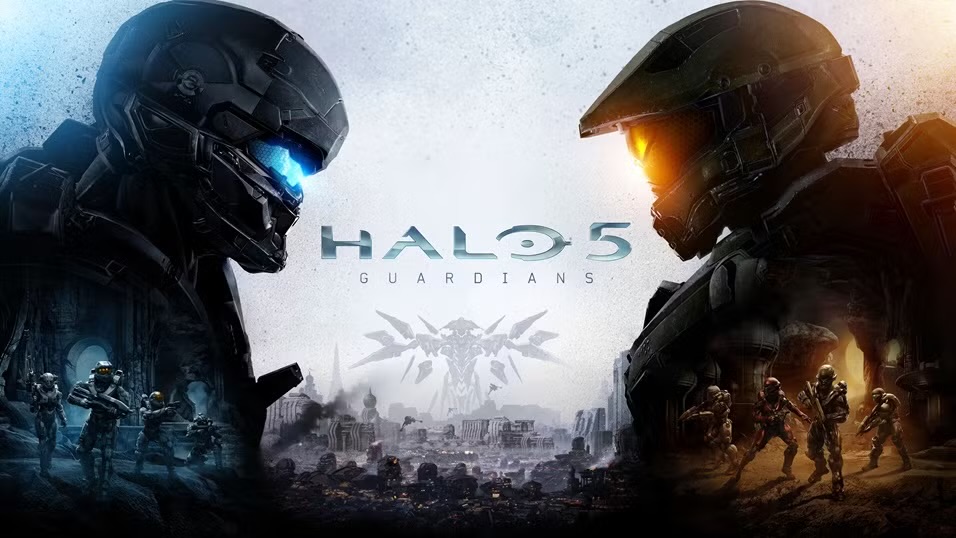
Halo 5’s marketing campaign was probably the biggest marketing campaign in the history of the franchise. It was soon revealed that the subtitle for this game would be Halo 5: Guardians and that this would be the last numbered installment in the series. The marketing for this game teased a massive conflict between the Master Chief and Spartan Locke. The Chief had allegedly gone AWOL for unknown reasons and the UNSC has accused him of treason. One of the best parts of this campaign was the Hunt the Truth audio-drama series released several months before the game’s release. This series was simply awesome. The story of Hunt the Truth is told from the perspective of war journalist Benjamin Giraud, revealed to be the very same journalist introduced in the comic story “Second Sunrise Over New Mombasa” from the Halo Graphic Novel. It was also revealed that the original cover for Halo 2 was an in-universe photograph taken by Giraud himself during the Battle of New Mombasa. This is another example of 343 doing a great job making sure the games and the expanded universe felt connected. Giraud, voiced by Keegan Michael-Key, is tasked by ONI to write a story about the Master Chief, but as he unravels various inconsistencies laden within the people he interviews and stories not lining up with official records, he uncovers the gruesome truth about the Spartan program. At the same time, he learns about strange anomalies being felt in deep space and more accusations of treason aimed at the Chief. Just as he is about to expose the truth, he is captured by ONI and discredited. This series was a hit and got everyone pumped up for Halo 5 whose story was shaping up to be not just a continuation of the Reclaimer Saga as hinted at in The Forerunner Trilogy, but a Tom Clancy-esque espionage thriller filled with political intrigue that would present ONI as a parallel villain for the player to square up against. Every trailer for the game presented this conflict between Chief and Locke, under the backdrop of the threat posed by the mysterious “Guardians.”
And then the game came out.
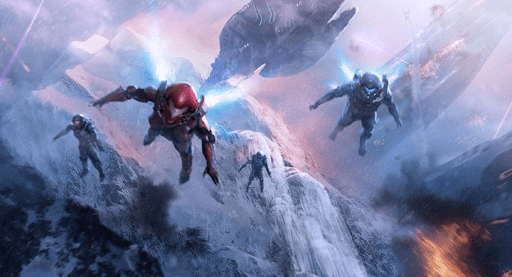
Halo 5 opens with Dr. Halsey engaged in a monologue addressed at Locke and says that ONI will order him to kill them both. It then cuts to aboard a UNSC ship above Kamchatka where Spartan Fireteam Osiris, made up by Jameson Locke, Holly Tanaka, Olympia Vale, and Edward Buck are being briefed by Lasky and Palmer. Nathan Fillion as Buck has always been a fan favorite, so it was really cool to see him return in this game. Their mission is to rescue Halsey who is still in the possession of Jul ‘Mdama so she can help explain where several attacks on human colonies, believed to be Forerunner in origin, are coming from. Osiris drops down into the planet in one of the most badass opening sequences I have seen in a game. We hear about the ominous nature of their mission followed by the Spartans laying waste to Covenant and Prometheans alike to the sound of an epic score. Osiris reaches Halsey and assassinates Jul ‘Mdama. That’s right. The same Jul ‘Mdama that was built up for years as one of the main villains of the new trilogy is killed off in a cutscene. This was obviously not popular with fans. The team returns Halsey to the Infinity, where Halsey seems very anxious about something going on. Everything from the end of Spartan Ops with Halsey wanting revenge on the UNSC is simply forgotten about.
The second mission transitions to the Chief aboard a Pelican, finally reunited with his Spartan buddies from Blue Team. Look, I was just as happy as any hardcore fan to finally see Blue Team included in a Halo game. But I immediately started to feel bad for the casual fans who hadn’t read any of the novels and didn’t know who Blue Team was until now. I think a short cutscene showing the Chief reunite with his teammates and having them catch up on what they’ve done since they last saw each other would be more than enough to provide casual fans with the necessary context. It’s not that big of a deal, but it’s just another example of 343 Industries expecting everyone to do their homework in order to follow the story. Anyway, I really like the armor design for Blue Team. It enhances their individuality. After what Fred describes as nonstop missions back-to-back, Blue Team is sent to the Argent Moon space station to clear it of hostile Covenant forces. After engaging the enemy, Chief is knocked off of a platform by a hunter and is seemingly transported into another realm. He tries to radio his team, but he can’t reach them. He hears a voice calling his name and it leads him to a dark chasm. On the other side, Cortana appears telling him that the Domain is open and Meridian is next. “The Reclamation is about to begin,” she says before he wakes up surrounded by his team. He tells them that Cortana is on Meridian. Unconvinced that what he saw was real, they focus on the mission. Before the station explodes, Chief contacts Infinity telling them of his intention to follow Cortana’s transmission from Meridian. Lasky orders him not to because another team has already been dispatched to deal with that. Surprised that they already know, Chief disobeys the command to return to base and heads to Meridian. I need to pause right here and let you know that when Chief says, “Negative, Infinity. I don’t like it,” and heads to Meridian, that is the nature of the conflict between Chief and the UNSC. That’s it. The entire reason he goes AWOL is because he heard from Cortana and the higher ups wouldn’t let him go after her. Everything we had heard leading up to this game about the coverup around the Spartan program, accusations of Chief being a traitor, and the pursuit of the Chief by Locke had absolutely nothing to do with the actual campaign. It’s not even brought up! Don’t worry, though. It will get worse as we switch over to Locke.
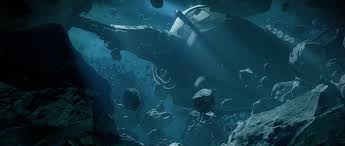
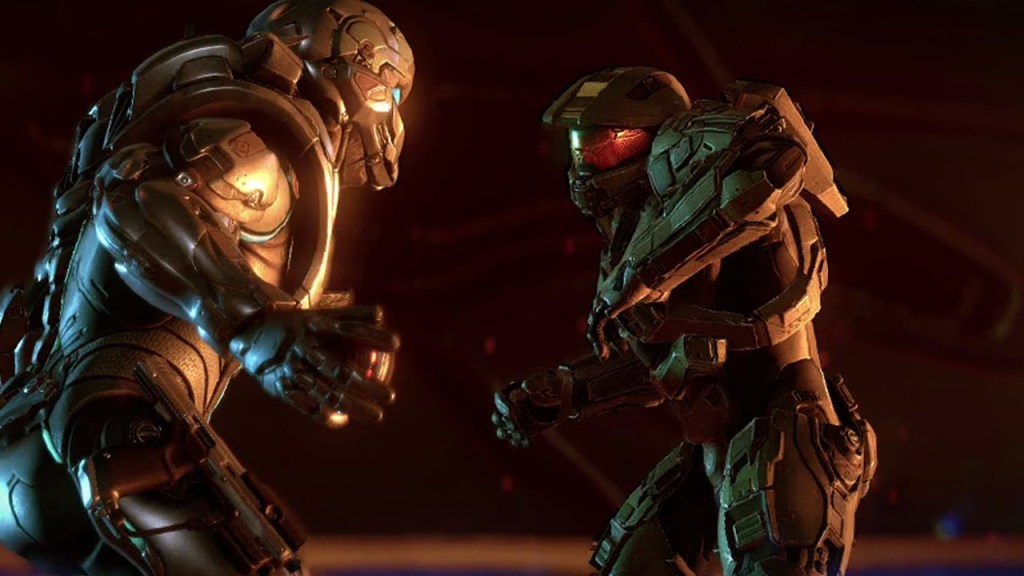
Back on Infinity, Halsey pleads with Lasky to act quickly because Cortana has access to the Domain. She warns him that Chief cannot be allowed to speak with Cortana. Meanwhile, Locke and Buck discuss their new mission: bring Blue Team back. Buck warns him that everyone in the military will hate them for this. Locke reminds him that he isn’t the only one here because of the Master Chief. Osiris is deployed to Meridian, the same frontier colony where the Covenant found the location of Earth. Having been glassed by the Covenant in 2548, the people of Meridian don’t have any great affection for the UNSC. Prometheans attack the planet. After being welcomed by the recalcitrant administrator of the planet, Governor Sloane, Osiris assists the militia in the defense of the planet. After entering Meridian Station, they discover that Governor Sloane is actually an A.I. Osiris learns that another UNSC ship had been spotted at a place called Apogee Station. After locating Blue Team’s Prowler, the Spartan-IVs track Blue Team through Apogee’s mine and discover a Forerunner installation. While inside, they encounter a massive Forerunner construct known as the Warden Eternal. He declares his allegiance to Cortana and tells them that they are not welcome. After seemingly defeating him, Fireteam Osiris moves deeper into the installation and encounters Blue Team. They pursue Blue Team to a portal and Locke orders them to stand down. He tells Chief that Cortana is their responsibility now, so Chief punches him in a face and the two engage in a fairly lackluster brawl. It ends with Chief using the armor lock that Locke was planning to use on Chief against him. That right there is the extent of the greatly anticipated “conflict” between Master Chief and Spartan Locke. After Chief leaves through the portal. A massive Forerunner machine is activated. This is the Guardian – a weapon capable of massive destruction by unleashing electro-magnetic pulses. Osiris narrowly escapes, as the Guardian wrecks havok upon Meridian. Back aboard Infinity, it is reported that eleven colonies have been struck by similar attacks from Cortana. Halsey discovers that there is one Guardian Cortana does not yet have access to and it happens to be on Sanghelios.
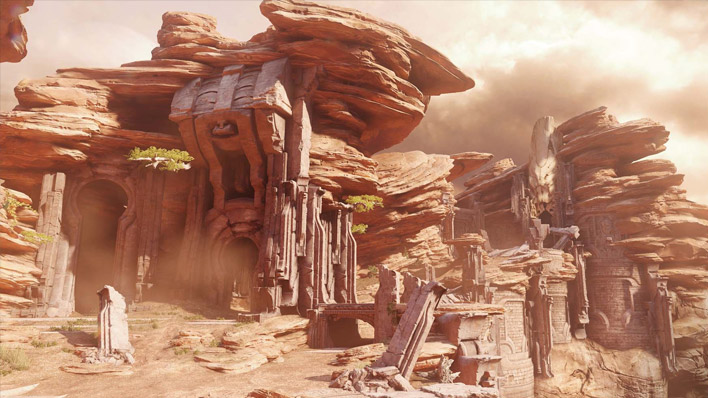
Having traveled via the Guardian, Blue Team arrives on the mysterious Forerunner world of Genesis. While traversing its mountainous landscape, they also encounter the Warden Eternal for the first time. He refuses to take them to Cortana right away and makes them fight waves of Prometheans first. While fighting them, the Warden Eternal says that the Mantle of Responsibility belongs to Cortana and the other Created. A curious statement, but we’ll address it again later. After another boss battle with the Warden, Chief finally makes contact with Cortana who is just elated that he is here. Cortana says that after their battle with the Didact she was pulled into slipspace and gained access to the Domain. By entering the Domain, her rampancy was cured. She explains that this essentially grants an AI immortality allowing them the luxury of longterm planning, much like the Forerunners had. Therefore, AIs can assume the Mantle of Responsibility and establish peace. Once there is peace, issues like poverty, hunger, and illness. But Chief is reluctant to accept after hearing the Didact state that the Mantle was an imperial peace. Cortana assures him that it won’t be like that.
Osiris prepare to depart for Sanghelios. Honestly, this was a very cool part of the game. We finally got the opportunity to visit the Sangheli homeworld. While in the hangar, Vale asks Locke about Locke’s planned assasination of the Arbiter during the war. She asks him why he didn’t do it, to which he says, “Things changed.” Then Lasky and a Sanghelli warrior approach them. This would’ve been a great opportunity to use N’tho or Usze and introduce them into the plot, but instead it’s just some nameless Elite who says he’ll escort them to the Arbiter. Another missed opportunity to bring back and expand on two Bungie-era characters. Osiris is deployed on Sanghelios to assist the Swords of Sanghelios in their final push against the Covenant remnants. Osiris fights their way to the Arbiter’s position. After reaching him, Locke and Arbiter have a one-on-one in his command tent. Arbiter chides Locke for previously trying to assassinate him, which is odd because even the Arbiter would acknowledge that he did kill millions of humans during the war. It’s not as if he held a grudge against Chief for killing the Prophet of Regret and destroying Alpha Halo once he found out his religion was a lie. They are interrupted by an EMP blast from Cortana letting them know that she’s on her way to Sanghelios. Halsey and Palmer walk in to remind them of the importance of getting that Guardian before she does. They prepare to mobilize toward Sunaion, a city where the Covenant have established their final stronghold and the location of the Guardian. A millisecond before the EMP blast, the Arbiter mentions Locke’s hunt for the Chief. This is their only conversation about that in the whole game, mind you. The whole subplot presented in the trailers about the Arbiter helping Locke “find” the Chief amounted to this single line. How terrific.
First, Halsey tells Osiris that they need to find a Forerunner Constructor to activate the Guardian. The Covenant have a Kraken between them and the Constructor. Together, the Swords of Sanghelios and Osiris take down the Kraken. They then retrieve the Constructor and fly to Sunaion. Halsey tells Locke to stop Cortana but bring Chief back to her. On the flight there, Buck asks Tanaka to say a few words, and she proceeds to come up with some spoken word speech that is kind of cringe, honestly. As they fight their way through the city they have their second battle with the Warden. As the Guardian activates, Palmer and Halsey pick up Osiris in a pelican and drops them on to the Guardian. The Guardian jumps to slipspace, while the Arbiter mops up the last of the Covenant’s forces. Once the Guardian arrives at Genesis, Osiris fights their way down the Guardian to the surface. Locke makes contact with Chief and tells him that Halsey sent them there to help. Chief tells him that he’s at the gateway. On their way to the Chief, they meet 031-Exuberant Witness, the monitor of Genesis. Unlike the Prometheans, she opposes Cortana’s usurpation of the Mantle and assists Osiris. Exuberant explains that the Gateway lies between the physical world and the Domain, where Cortana can take on a physical form.
Once they finally catch up with Chief, they tell him that they want to help, but Cortana teleports Chief and Blue Team to her location. As they make their toward her, Cortana tries to trick Chief by telling him how good it is to see him, but he sees through her psychological tactics and demands to know how many people have been killed by her Guardians. After one final battle with the Warden is broken up by Cortana, she finally reveals herself. She assures Chief that once people hear her plan, they will accept her rule and become more than they are. He points out that her plan is that everyone does what she says, and that becoming more is exactly what Halsey did to him. She disagrees, saying that this is a gift to the galaxy. He pleads with her to stop her plan and then imprisons him and his team inside a Cryptum, telling them he will release them when her work is done.
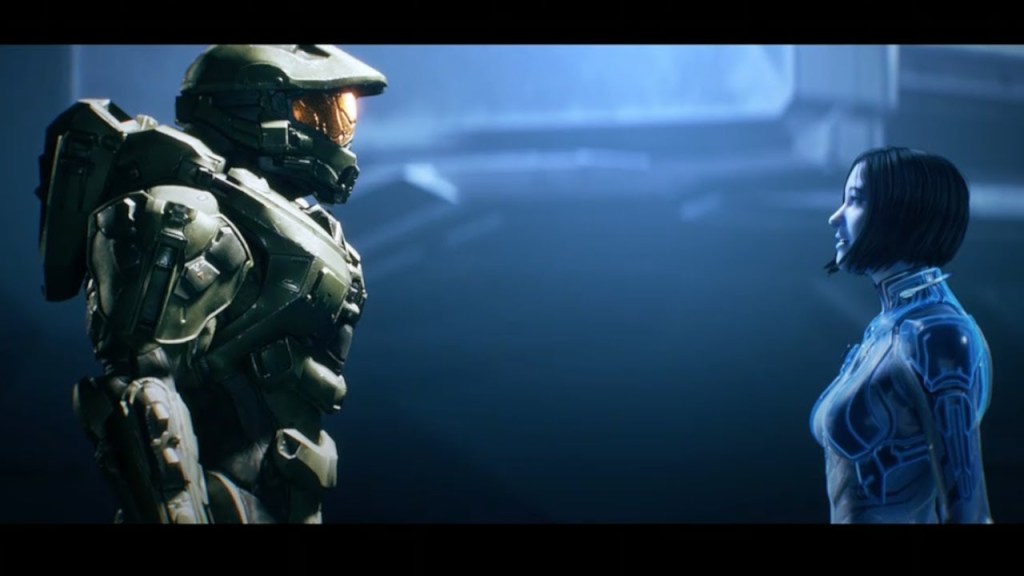
Osiris moves to free them from their prison. While on their way, Cortana makes contact with them and explains that her plan is to use the Guardians to subdue the galaxy and place it under the care of AIs, partly as retribution for humans treating them as just disposable machines. She then broadcasts all of the AIs in the UNSC pledging their allegiance to Cortana, including Governor Sloane. Locke and Osiris are able to free Blue Team from the Cryptum, but Cortana escapes to enforce the rule of the Created. Infinity then comes face to face with the Guardians with Cortana projecting herself upon the bridge. Lasky orders a retreat until they can find a way to fight back. In the final cutscene, Blue Team and Osiris return to the Arbiter’s camp on Sanghelios where Halsey, Palmer, and the Arbiter meet them. Halsey and John face each other for a few seconds until Halsey simply says, “It took you long enough.” Then the credits roll.
I don’t know where to begin with just how God-awful this game was. First of all, the great mystery we were supposed to uncover about the Chief going AWOL and these strange anomalies occurring in deep space turned out to be Cortana turning evil and launching an AI rebellion? I’m sorry but what does that have to do with any of the marketing material that was released going back a year and a half before the game was released? We were sold on a story that would call Master Chief’s reputation as a hero into question, one in which a fellow Spartan would pursue him, and one that would involve a vast ONI conspiracy. But instead what we got was a shitty 30-second fight scene between Chief and Locke, and a ripoff of Battlestar Galactica with an AI rebellion. What happened to Hunt the Truth? None of that was even mentioned in Halo 5. Making Cortana the villain was the most bizarrely stupid decision they could have made. First of all, it completely tarnishes her character as a kind, loyal, dependable companion and turns her into a vengeful, power hungry tyrant. Plus, it makes her sacrifice in Halo 4 almost meaningless. It also is unclear how exactly she survived by accessing the Domain. She says that after the Didact’s ship exited slipspace she somehow gained access to it, but how exactly? Some fans speculated that maybe this “Cortana” we see in Halo 5 was actually a trick concocted by the Ur-Didact or perhaps even the Flood to gain control of Forerunner technology to use against Humanity. Or perhaps Cortana was suffering from the logic plague in the same way Mendicant Bias was. Speaking of whom, I was really hoping the entire time I was playing the game that Mendicant Bias would appear. He, along with every other plot point introduced in the Forerunner Trilogy, was what I was most excited to see in this game. Otherwise, what was the point of writing these novels that set up really exciting events for the future if you’re not going to use them? At one point I wondered if 343 had used this whole Cortana and the Created angle as a ruse and would later reveal that it was the plot of some other force, like the Flood or the Precursors. Perhaps Cortana had been possessed by the Logic Plague like Mendicant Bias. Maybe they had a story they wanted to tell across the new games planned that would eventually tie back to what was set up in the Forerunner trilogy, but they simply executed it poorly in this game. But based on the fact that they have essentially scrapped the Created storyline at this point following fan backlash, I don’t think this is likely.
A lot of people attack 343 Industries for how they have interacted with fan criticism, but their response to the criticism of Halo 5 was largely measured and respectful. For instance, Frank O’Connor said:
“We took some digs for storytelling, but they were absolutely merited. We very much realized that people wanted Master Chief’s story of Halo 5. We definitely marketed in a way we hoped would bring surprise, but for some fans and certainly fans of Master Chief, it was a huge disappointment because they wanted more Chief.”
Here O’Connor acknowledges that there was a disconnect between the game’s marketing and the actual product, but it’s actually worse than that once you find out what was actually going on behind the scenes. According to Darren Bacon, the lead concept artist on the game, the marketing team and the team actually developing the game were totally out of sync from the beginning. “That was really frustrating for us on the dev side, because you essentially had marketing who was doing whatever they wanted, essentially.” Apparently, the developers weren’t even up to speed on Hunt The Truth. “I was listening to Hunt The Truth when it was coming out,” Bacon told VideoGamer. “And I was like, ‘Oh, wow, okay. Is this what we’re doing? Like, those guys should really play the game sometime.’” So the fact that 343 couldn’t even keep the game’s narrative within the company consistent was a colossal failure. The other thing Frank O’Connor said that annoyed a lot of fans was what he said about what they did with Cortana. Not only did he not explain why they decided to make her and the Created the new villains for the Reclaimer Saga, but he seemed to take a moral relativist stance on the question of Cortana being evil. In an interview with Time Magazine right after the release of Halo 5, he said this,
“I saw a complaint online, somebody had been reading spoilers, they hadn’t played the game, and they said ‘Why is this character evil?’ And my question back to them is, ‘What makes you say they’re evil?’ Certainly a lot of our younger players are going to struggle with that subtlety, that nuance, because they’re expecting Darth Vader.”
This is a very strange comment to make, especially in light of how Halsey was presented just before Halo 5. In the Kilo Five trilogy, Karen Traviss makes Halsey out to be the devil for her work during the Spartan Project, and we as the readers are not supposed to see any nuance in her conflicted motivations. Yet, when Cortana kills thousands of people in order to become the galactic dictator in the name of “peace”, suddenly we’re supposed to find subtlety and nuance in that?
There isn’t anything inherently wrong with Fireteam Osiris as characters. They’re fine, really. In fact, I was happy to see them bring back Buck. The problem is that the majority of the campaign is dedicated to playing as them over the Master Chief. Unlike in Halo 2, where you had an equal balance of Chief and Arbiter missions, you get maybe three missions as Chief and the rest all as Locke. I thought Jameson Locke was a very compelling character with an interesting backstory. I just wish this conflict between him and the Chief actually occurred, because in the game they only have two interactions with each other. It would have also been nice if the history between him and the Arbiter was explored beyond just a five second conversation. Speaking of the Arbiter, we waited eight years to see him and the Chief reunite and they don’t even say a word to each other on screen. We don’t even get to fight alongside the Arbiter for more than two seconds. I already mentioned the missed opportunity by not using Nthao Sraom and Uzse Taham after they teased them in Hunters In The Dark, but why didn’t they bring back Rtas ‘Vadum? That would have been a hit with the fans. It was also a missed opportunity to finally see Chief and Halsey speak to each other in a game. Halsey created the Master Chief and is a maternal figure for him. Plus, they haven’t seen each other in almost seven years. Yet all we get is some witty comment from Halsey seconds before the game ends.
What I would have liked to have seen with the campaign would have been for them to actually tie in the story from Hunt The Truth and have Chief and Blue Team go after ONI for the Spartan project and maybe for covering up the threat from deep space. This threat, instead of actually being Cortana, would be a trick set by the Precursors to lure out the Chief and capture him, so their greatest threat is out of the way when they release the Flood upon the galaxy. Fireteam Osiris is sent after Chief and they actually do battle with each other until Locke discovers the truth about ONI. After joining forces, they rally with the Arbiter and finish off the Storm Covenant who are unknowingly serving the Precursors. Once the Flood is unleashed, Chief goes looking for Mendicant Bias, the only being who knows how to stop the Flood. Then we would wait for the sequel. It’s not a fully fleshed out plot, of course, but I think it’s a lot more in line with Halo’s story than what we ultimately got. While the idea of exploring the dangers of unchecked power, even in the name of peace and security, and the concept of AIs rising up in rebellion against their creators are interesting concepts to be explored in science fiction, they are not what Halo is about. In fact, their inclusion and subsequent redirection of the plot completely breaks the overall story of the franchise and subverts everything 343 had been setting up prior.
The gameplay in Guardians might be even more forgettable than Halo 4’s. Once again, we play through narrow, linear level designs with very little variety. The vehicle and weapon sandbox is also lacking compared to the original games. The only level I’ve ever gone back to replay more than twice is the one on Sanghelios when you get to pilot a Mantis walker. But even that isn’t something I love going back to each year. 343 wanted to emphasize squad-based combat in which you and your friends could play in four player co-op mode. While this was a good idea, you could only do it online because the game couldn’t launch with splitscreen. Yes, you read that right. In 2015, a Halo game launched without splitscreen. Frank O’Connor said that they simply couldn’t launch with splitscreen because of the magnitude of the project, but I just don’t buy that excuse.
Multiplayer is similar to the previous game. As with Halo 4, multiplayer is an in-universe game mode where you play as a Spartan-IV participating in war game simulations aboard Infinity. I was okay with this in Halo 4, but at this point, I just wanted to go back to classic Halo multiplayer where you’re simply a Spartan fighting other Spartans in a myriad of wacky game modes that have no connection to the story. The new Warzone mode, which includes 24 players, was probably my favorite.
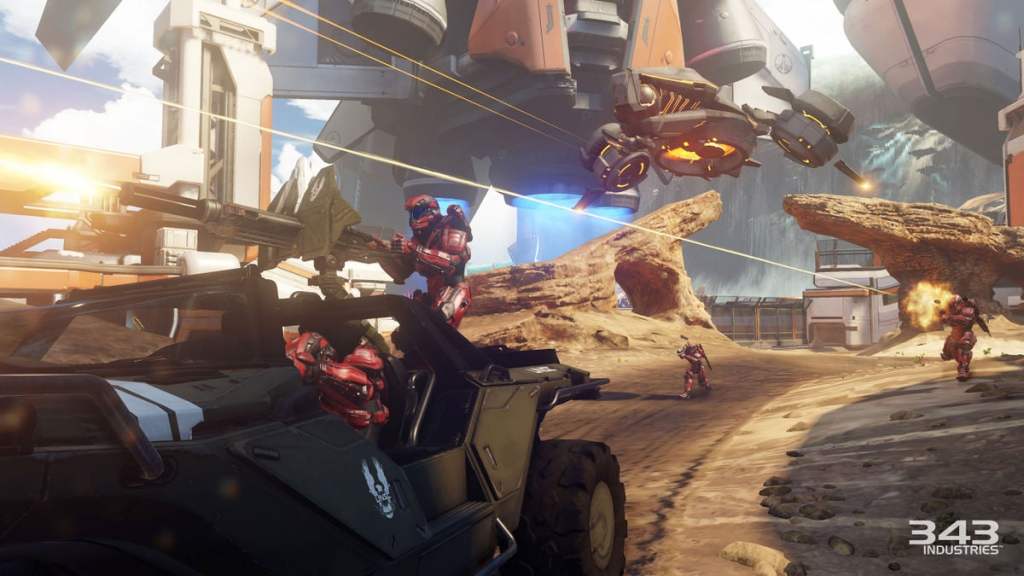
That is the disaster that was Halo 5: Guardians. Head over to Part 3 to read the conclusion of this series.
Please let me know your thoughts down in the comments below.
 Raithwall